Fiction and education, not advice. See our Disclaimer.
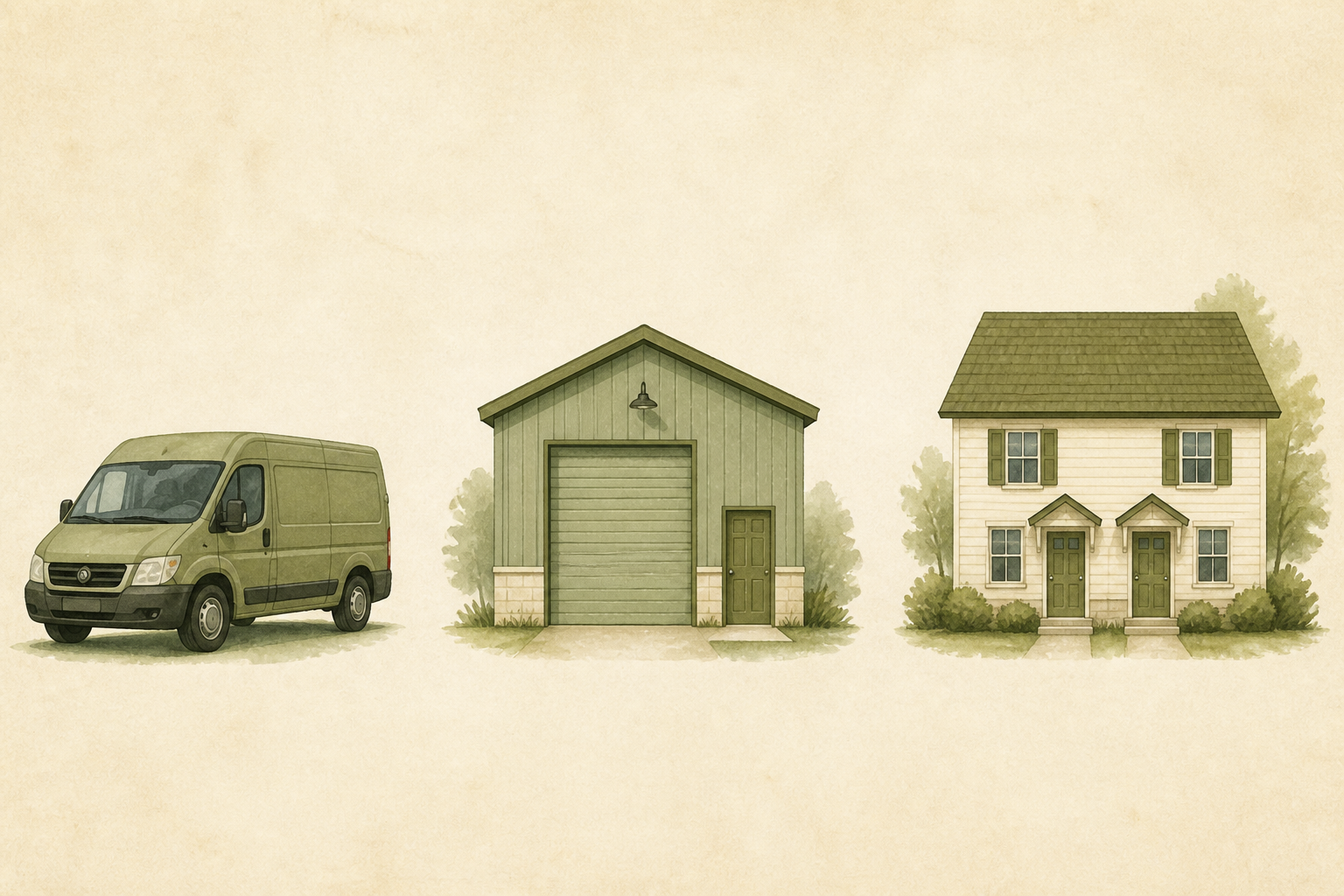
A work van, a shop, and a house get mashed into one sentence: “I own my business, so I own real estate.” They are three different piles. Different loans, different insurance, different ways they break, different ways you get the cash back out.
This post uses Sam Ortiz, our fictional plumber who also bids small remodel work from one van, as a story beat. In his August 2026 report he rents half a duplex, pays a van loan, and does not have a shop. That is a plot device, not a template. It is not a reason to buy a bay, keep renting, or trade the van.
The van is a tool that rolls
The van is how the water heater gets from the supply house to the job. It holds the tools. It eats brakes, fuel, tires, and a commercial auto policy. If there is a loan, a monthly number leaves checking whether the invoice from June has cleared.
It is not a building. It does not sit on a zip code the way a house does. Used-market value goes down as miles go up. Calling the equity in a cargo van “real estate” is how a net-worth page gets poetry it did not earn.
A van can still be the biggest number in a tradesperson’s stack. That does not make it a house. See a house is one address: concentration is a description, not a vibe. One vehicle is concentration too.
The shop is a lease or a commercial building, not a second kitchen
Some tradespeople never have a shop. The van is the shop. Some rent a bay: a commercial lease, a CAM fee, a landlord who is not your residential landlord, rules that live in a different document than a duplex lease. Some buy a small industrial building. That is commercial real estate. Different loan. Different insurance. Different tax treatment. Not a spare bedroom with a roll-up door.
Owning a shop is also not landlording. You are not collecting rent from tenants. You are paying for a place to park parts and weld. If you later rent unused bays to other trades, that is a job on top of the job. We will not dress it up as passive.
This post does not pick “rent a bay,” “buy a building,” or “stay in the van.” Those are different cash-flow stacks. The documents know. A blog post does not.
The house is still the housing stack
Sam’s housing line is rent on half a duplex. That is the same family of numbers as city rent math and rent vs buy as cash flow: what leaves checking for a place to sleep, including the fees that are not called rent. If the plot ever moved him into a purchase, the stack would be PITI, dues, and maintenance, not “the van is almost paid off, so a house is the next trophy.”
A busy whiteboard does not pay a mortgage. Late invoices do not care that a listing looked like a reward for surviving another year of calls.
A napkin, not a quote
None of these figures are a market, a commercial listing, or a recommendation. They are arithmetic so the three columns can sit still, using Sam-shaped fiction:
- Van column: $468 loan + $180 commercial auto (monthly-ish) + $340 fuel = about $990 leaving checking, on a vehicle whose used-market number can shrink next year.
- Shop column: $0 in Sam’s actual August. A fictional bay at $900 plus a share of utilities would be a new line, not a rebrand of the van.
- House column: $1,425 duplex rent, before renter’s insurance and the electric bill.
Three columns. Three reasons money left. Mixing them into “my overhead” hides which pile is a tool, which is a workplace, and which is a bed.
Do not pay for one pile with another pile’s name
A HELOC against a house to buy a van or a bay is still a loan with the house as collateral. It is not a raise, and it is not “using the business.” The van does not care that the house signed. The house does not get more diversified because a cargo van is now in the driveway.
The automatic S&P 500 example we use elsewhere on this site is a different classroom object: a broad basket on a calendar. A van is one vehicle. A shop is one building. A house is one address. We are not saying index funds beat trades, or trades beat funds. We are saying the labels are not interchangeable.
How this shows up in the rest of the cast
Casey already lives around a shop as a service advisor: the building is the employer’s, the hours are the job, the house is still a separate stack. Riley paying city rent has no van loan and still has a housing column. Robert’s paid-off house still is not free. Different costumes. Same habit of listing each pile under its own name.
None of those people are you. See the Disclosures. Results are not typical because the results are not real.
A plain way to read the three piles (still not advice)
If you are only trying to understand a tradesperson’s housing-and-work mix, the statements and leases usually answer five questions:
- Which dollars are the van (loan, insurance, fuel, repairs), and is that a depreciating tool or a building?
- Is there a shop, and is it a commercial lease, an owned building, or the van pretending?
- What leaves checking for a place to sleep, labeled as rent or as PITI, not as “overhead”?
- If one invoice is late, which of those three columns still gets paid on the first of the month?
- If you borrowed against the house to fund the van or the bay, what is the collateral, not the slogan?
A CPA, commercial lender, insurance agent, attorney, or licensed advisor can walk those answers for a real person. We cannot. We write fiction on purpose.
Education and entertainment only. Not financial, tax, legal, or real-estate advice. Vehicles, shops, and houses all cost money and can lose value. Consult a licensed professional about your situation. Use the actual lease, loan, and closing documents.
Leave a Reply