Fiction and education, not advice. See our Disclaimer.
Earnest money is not a down payment. That is the whole classroom. A good-faith deposit that travels with an offer and the equity cash you bring to closing are different piles. Mixing the labels is how “I put money down” starts meaning the wrong stack.
This post uses a light story beat with Priya Shah, our fictional medical-billing cast member who already treats “which line is which” as a survival skill on a thin household budget. Priya already knows a patient copay and an insurance write-off are different machines. Earnest money vs a down payment is the same split with a house costume. Characters are plot devices. They are not tips. This is not a buy, sell, offer, counter, or walk-away verdict.
This is vocabulary. Results are not typical because the results are not real. See our Disclosures. Use your own contract and offer docs, closing figures, and a licensed professional for anything that touches an offer, a loan, or a house.
What earnest money usually means here
In the classroom shorthand, earnest money usually means a good-faith deposit that goes with a purchase offer. It is cash (or funds) put up early to show the offer is serious, then held under the rules in that contract — often in escrow — while the deal moves. Exact amount, who holds it, when it is released, and what happens if the deal falls apart live on the offer paperwork and local practice. We are naming the label, not quoting your rider, not ranking deposit sizes, and not telling you a particular earnest figure was “smart” or “dumb” today.
Earnest money is timing and commitment energy. It is not automatically the full equity contribution you will need at closing. It is not a tip. We already have a sibling classroom on earnest money vs a tip. Today’s point is the other common smear: treating the deposit pile as if it were the down-payment pile.
An earnest deposit is not a deed. It is not a mortgage. It is not “I’m done putting money in.”
What a down payment usually means here
A down payment usually means the equity cash you bring toward the purchase price at closing — the buyer’s skin in the game that sits under the loan (or under an all-cash close). Closing disclosures, lender worksheets, and the purchase contract speak to how much equity is required, how it is wired, and what counts. Exact program rules, gift-fund rules, and cash-to-close math live on those documents, not on a casual “I already put money down” sentence.
Down payment is closing-day equity energy. It can be a large number. It can be a smaller number on some loan paths. We are not ranking loan products, not telling you a percentage target, and not saying you should buy.
A down payment is not earnest money with a louder nickname. It is not PMI. It is not closing costs as a whole (those can include other fees that are still not “the down payment”).
How the two piles can interact without becoming the same machine
In many deals, earnest money that is still held when you close is credited toward the cash you need at closing — which can include the down payment line. That credit is real when the contract and closing figures say so. It still does not make the deposit and the down payment the same machine.
- Different timing: earnest often shows up with the offer; the down payment lands in the closing stack.
- Different rules: deposit release, contingencies, and default language live on the offer path; equity and loan math live on the loan and closing path.
- Different failure modes: a deal that dies under the contract can treat earnest differently than a closing that simply needs more wired equity.
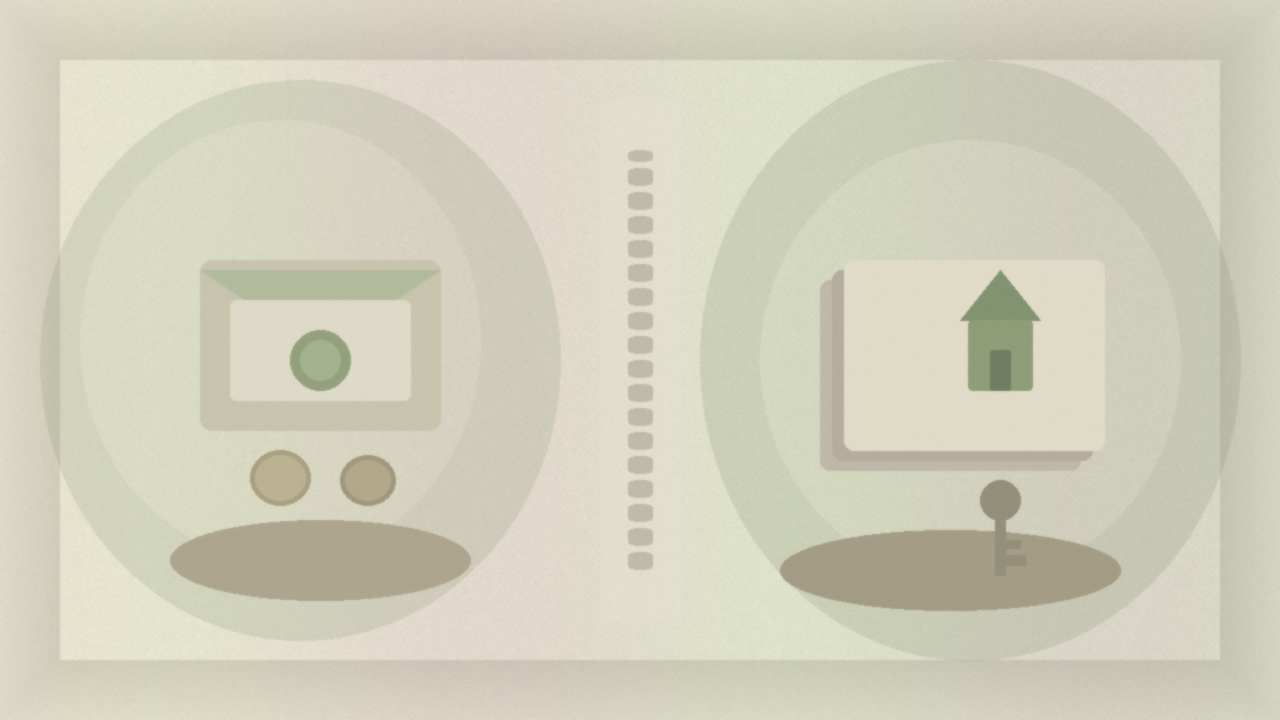
Think of earnest as an early marker chip and the down payment as the equity stack that finishes the buy. One chip can later sit on the equity table. That does not mean every chip was always the whole stack.
Why mixing the labels bites
Saying “I put money down” after wiring earnest can smear a good-faith deposit into a full down-payment story. Friends hear equity. Your brain hears “I’m mostly done.” The closing worksheet may still show a large cash-to-close number that includes down payment, remaining credits, and other lines. Keep the piles apart, then read the actual offer and closing figures.
Mixing labels is how a calm “I already put money down” sentence turns into a surprise when the down-payment machine was never fully funded — only the earnest machine was.
Priya’s fictional napkin (not a quote)
None of these figures are a real offer, a real closing, or a recommendation. They are arithmetic so the labels stay still. Priya is looking at two folders the way a medical biller looks at “which claim line is which”:
- Fictional earnest deposit with the offer: $5,000. Earnest pile. Good-faith / offer machine on this napkin.
- Fictional purchase price on this napkin: $320,000.
- Fictional down payment target discussed with the lender worksheet: $64,000 (a classroom 20% sketch — not a product or a target for you).
- Fictional “I put money down so I’m covered for the equity”: earnest energy dressed as a full down payment. Wrong machine if only $5,000 moved early.
- Fictional closing credit: the $5,000 earnest still held is applied toward cash to close. Useful bridge — still not proof the whole $64,000 equity pile was the same as the deposit.
- Fictional remaining equity to bring after that credit on this napkin: $59,000 before other closing lines move. Labels stay honest even when the credit is real.
Change the contract credit rules, and the arithmetic of “what still wires” moves while the labels stay separate. We are not ranking cities, loan types, or offer strategies. We are keeping the piles apart.
The automatic broad-index / S&P 500 classroom stays nearby as a comparison object, not a product. A scheduled index contribution is cash leaving on purpose into a diversified pile on a calendar. Earnest money and a down payment are still house-deal cash events with different clocks. They can both matter without becoming the same thing. We are not telling you to buy funds, sell funds, buy a house, or wire a deposit.
What this post is not
- Not advice on whether you should make an offer, how much earnest to put up, or what down payment to bring.
- Not a claim about what happens to your deposit if a real deal dies.
- Not a guide to contingencies, escrow disputes, or lender underwriting.
- Not tax, legal, or real-estate advice (those are other labels).
- Not a rehash of earnest money vs a tip — that sibling classroom already exists.
- Not a reason to treat “I put money down” as one magic phrase for every cash event in a purchase.
- Not a “should you buy a house” answer. We do not do those.
The one-line classroom
Earnest money and a down payment are (usually) different piles with different timing and rules. Keep the labels separate so “I put money down” stays honest about which machine you actually funded.
Entertainment and education only. Not financial, tax, legal, or real-estate advice. Fictional characters and numbers. Results are not typical because the results are not real. Read the Disclaimer and Disclosures. For anything that touches your offer docs, closing figures, or a house, use the actual documents and a licensed professional.
Leave a Reply